Tom Cruise Net Worth 2026 — How the Action Star's Obsession with Perfection Built a $600 Million Fortune
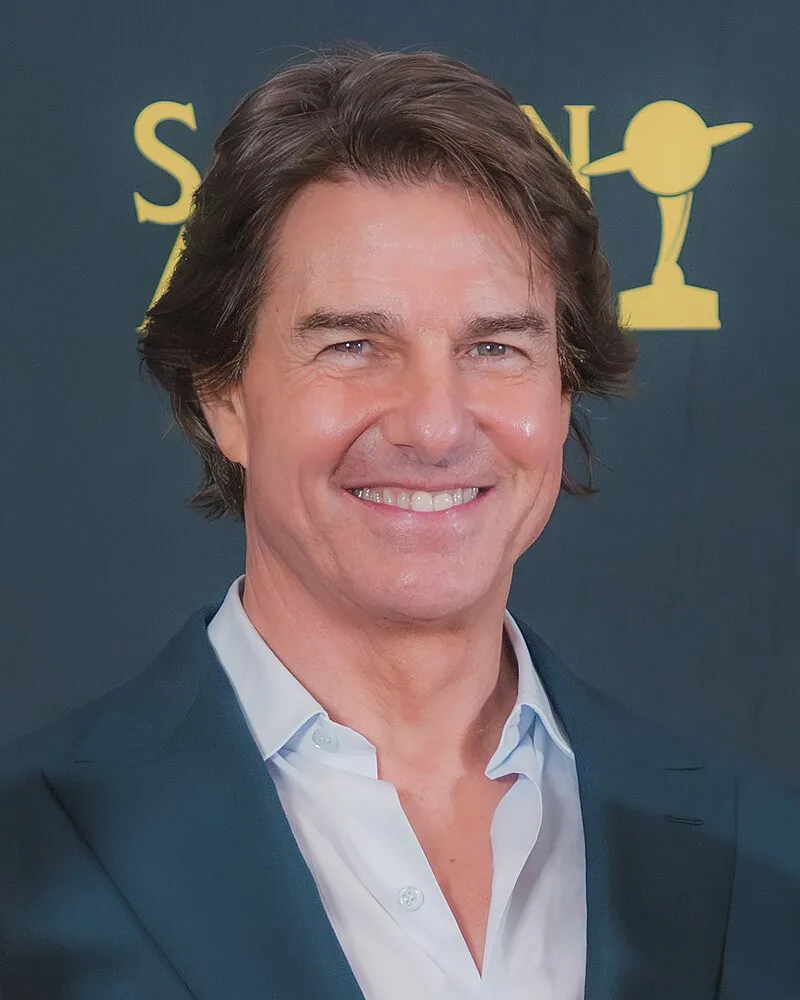
Photo of Tom Cruise, via Wikimedia Commons
In an era when franchise fatigue is Hollywood's most discussed ailment, Tom Cruise remains stubbornly immune. The 63-year-old superstar continues to command eight-figure paychecks, sell out global theatrical releases, and perform death-defying stunts that no insurer willingly underwrites. His estimated net worth of $600 million as of 2026 is not the product of luck or timing alone — it is the consequence of four decades of calculated decision-making, ironclad contract negotiations, and an almost obsessive insistence on cinematic quality.
Early Career and the Rise of a Bankable Star
Cruise's ascent began in the early 1980s with supporting roles in films like Taps (1981) and The Outsiders (1983), but it was Risky Business (1983) that announced his star power to the industry. Three years later, Top Gun (1986) transformed him into a cultural phenomenon, grossing over $356 million worldwide on a modest $15 million budget. At that stage, Cruise was already learning a lesson that would define his financial trajectory: the relationship between a film's commercial performance and an actor's leverage at the negotiating table.
By the time Jerry Maguire (1996) earned him his first Academy Award nomination, Cruise had long since graduated from flat salaries to backend participation deals — arrangements that entitled him to a percentage of a film's profits rather than a fixed upfront fee. This structural shift proved enormously consequential.
The Mission: Impossible Franchise — A Financial Engine Unlike Any Other
No single property has done more for Tom Cruise's bank account than the Mission: Impossible series, which he has shepherded since 1996. Across eight installments, the franchise has collectively grossed more than $4 billion at the global box office. Cruise serves not merely as the lead actor but as a producer through his company, Cruise/Wagner Productions, giving him profit participation on both sides of the ledger.
Industry analysts estimate that Cruise earned upward of $100 million from Mission: Impossible — Dead Reckoning Part One (2023) alone, once backend participation, international distribution bonuses, and ancillary rights were factored in. For Mission: Impossible — The Final Reckoning (2025), which concluded the franchise's two-part finale, those figures were reported to be even more substantial, with Cruise reportedly negotiating a deal that included gross-point participation — one of the most favorable contractual structures available to any talent in Hollywood.
His base salary for major studio productions has consistently ranged between $20 million and $30 million per film in recent years, placing him among the handful of actors who can still justify that level of upfront investment from studio executives.
Top Gun: Maverick and the Theatrical Revival
If the Mission: Impossible franchise is Cruise's financial foundation, then Top Gun: Maverick (2022) was its most spectacular single chapter. Released after pandemic-related delays, the long-awaited sequel grossed over $1.49 billion worldwide, becoming the highest-grossing film of Cruise's career and one of the top-ten domestic releases of all time.
Cruise had reportedly negotiated a deal with Paramount Pictures that included a significant gross-point participation clause. Estimates from entertainment finance sources suggest his total compensation from Maverick exceeded $120 million, a figure that encompasses his upfront fee, backend earnings, and production bonuses. The film also served a broader strategic purpose: it reaffirmed, at a moment of genuine industry uncertainty, that audiences would still leave their homes to watch Tom Cruise on the largest screen available.
Production Company and Creative Control
Cruise's production entity, originally established in partnership with Paula Wagner as Cruise/Wagner Productions and subsequently restructured under his sole operational control, has been instrumental in generating wealth beyond acting fees. By producing the films in which he stars, Cruise captures revenue streams that a purely talent-based deal would exclude — including home video, streaming licensing, and international sales.
The company has also explored development projects outside the Mission: Impossible umbrella, though Cruise's schedule has historically limited the volume of productions it shepherds simultaneously. His announced collaboration with NASA and SpaceX for an orbital filming project, while still in development as of 2026, signals an ambition to extend his production footprint into entirely new territory.
Endorsements and Brand Partnerships
Cruise has historically been selective with endorsement arrangements, preferring that his public identity remain anchored to his film work rather than commercial campaigns. Nevertheless, he has maintained lucrative relationships with select luxury and lifestyle brands over the years, with deals estimated to contribute between $5 million and $10 million annually to his overall earnings. His association with Ray-Ban aviator sunglasses, renewed in connection with Top Gun: Maverick's promotional cycle, generated significant attention and reportedly involved a meaningful licensing arrangement.
Real Estate Portfolio
Cruise's real estate holdings reflect both his global lifestyle and his appetite for substantial properties. He has owned residences in Beverly Hills, Colorado, and England, with his Clearwater, Florida property — connected to his long-documented affiliation with the Church of Scientology — representing one of his most notable holdings. His Colorado ranch, situated near Telluride, has been valued at approximately $40 million and serves as a primary retreat. Collectively, real estate analysts estimate his property portfolio at somewhere between $50 million and $75 million.
Recent Projects and the Road Ahead
With Mission: Impossible — The Final Reckoning having concluded the franchise's most recent chapter in 2025, the industry question heading into 2026 centers on what comes next. Cruise has been in discussions with multiple studios regarding a new action-oriented franchise vehicle, and his partnership with director Christopher McQuarrie — who helmed the last four Mission: Impossible entries — is expected to continue in some capacity.
At an age when most actors accept diminished roles, Cruise is actively developing projects designed to sustain his theatrical dominance through the end of the decade. His financial infrastructure, built over forty years of disciplined deal-making, ensures that whatever he chooses next will be negotiated from a position of extraordinary strength.
The Bottom Line
Tom Cruise's $600 million net worth is the sum of choices most actors never have the leverage or the discipline to make. Backend participation over flat salaries. Production credit over pure performance. Theatrical insistence over streaming convenience. Each decision compounded over four decades into one of the most durable financial legacies in Hollywood history. In an industry that regularly discards its stars, Cruise has made himself indispensable — and priced himself accordingly.