Eminem Net Worth 2026 — How Slim Shady Turned Detroit Struggle Into a $250 Million Hip-Hop Legacy
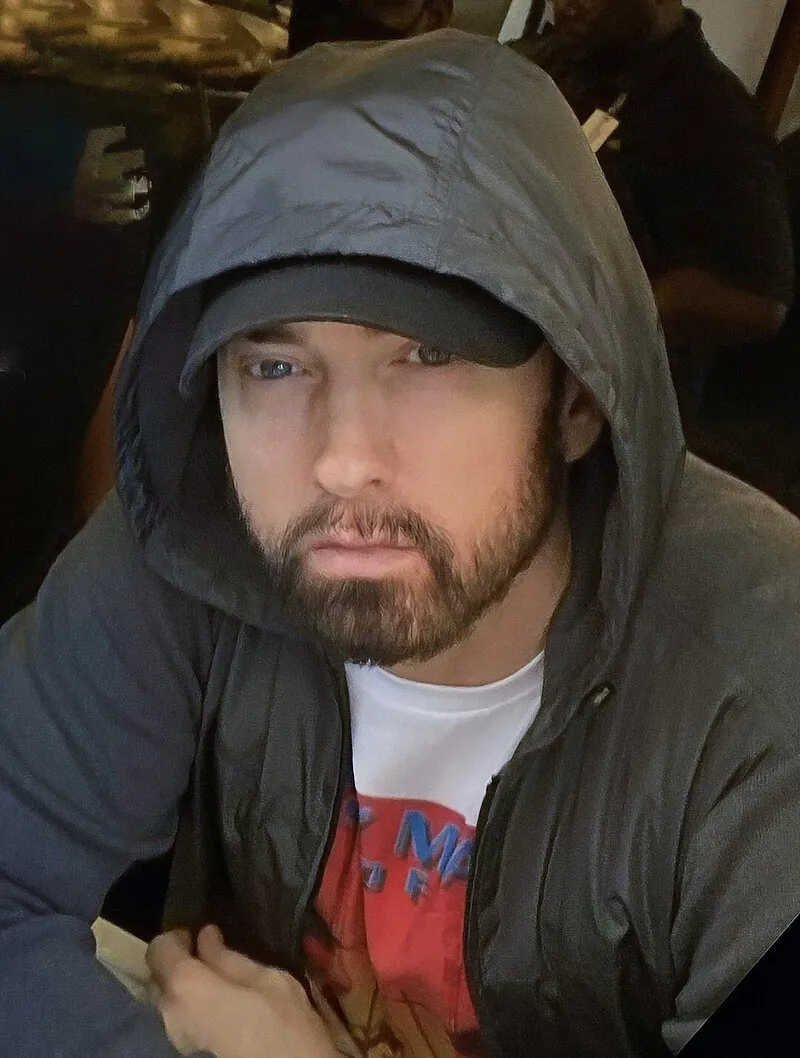
Photo of Eminem, via Wikimedia Commons
Marshall Bruce Mathers III grew up poor in Detroit, Michigan, cycling between unstable housing situations and a school system he largely abandoned before reaching high school graduation. In 2026, he is worth an estimated $250 million — a figure that represents not just commercial success, but one of the most disciplined catalog-building exercises in the history of recorded music. Eminem's financial story is inseparable from his artistic one, because it was the unfiltered rawness of his storytelling that created a commercial juggernaut capable of sustaining nine-figure wealth across multiple decades.
The Detroit Origins and the Dr. Dre Discovery
Before the platinum records and the movie deals, Eminem was a white kid battling for credibility in Detroit's predominantly Black hip-hop underground. He competed in rap battles at the Hip Hop Shop on West 7 Mile Road, developing the technical precision that would eventually make him one of the fastest and most lyrically dense MCs in the genre's history.
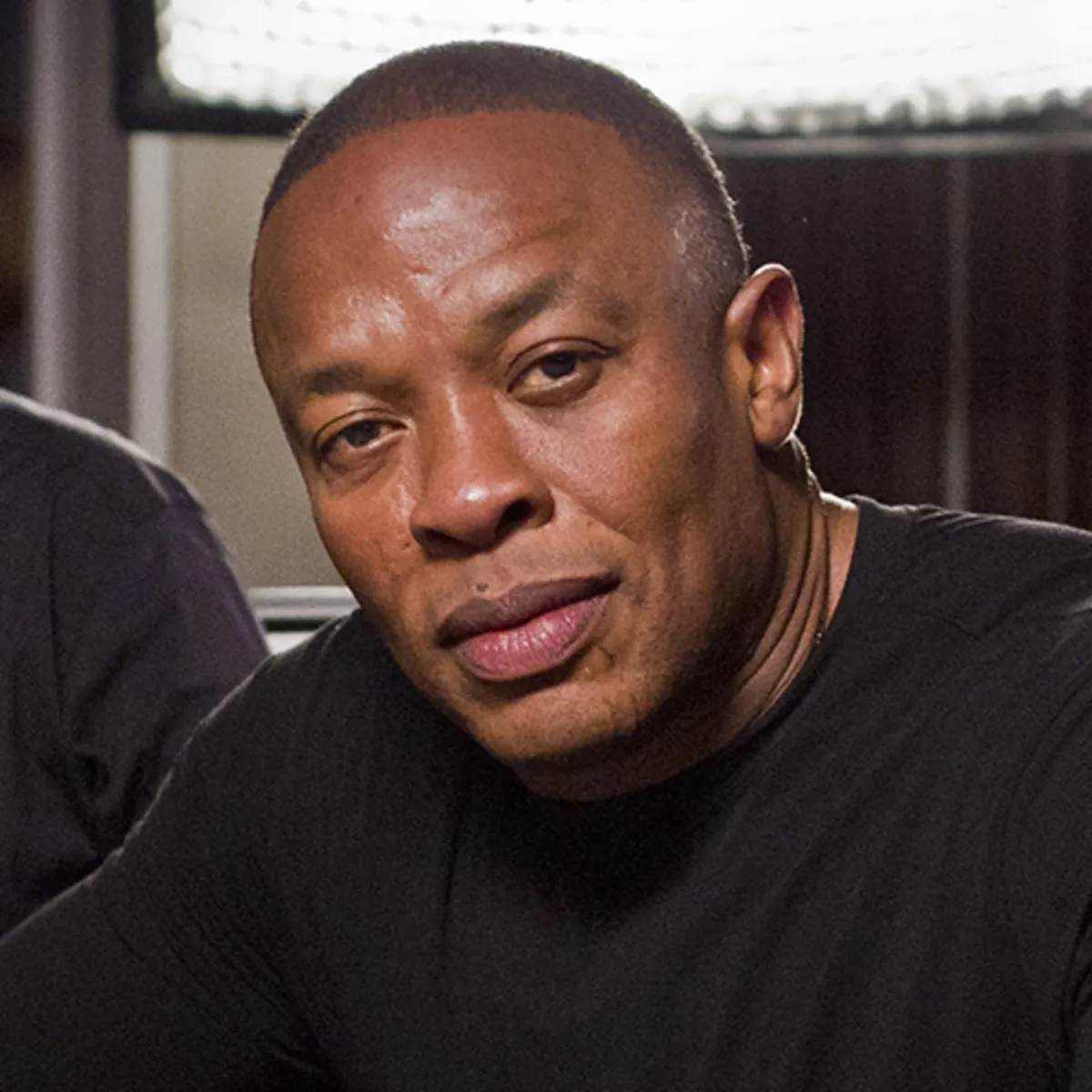 Photo: Dr. Dre, via theeventchronicle.com
The turning point arrived in 1997 when a demo tape landed in the hands of Dr. Dre via the Rap Olympics competition in Los Angeles. Dre signed Eminem to Aftermath Entertainment, and the resulting debut — The Slim Shady LP (1999) — sold over 18 million copies worldwide. The follow-up, The Marshall Mathers LP (2000), became the fastest-selling rap album in history at the time, moving 1.76 million copies in its first week in the United States alone. It has since been certified diamond by the RIAA.
These early albums established the financial foundation that continues generating royalties today. Streaming platforms have given Eminem's classic catalog a second commercial life; tracks like "Stan," "The Real Slim Shady," and "Lose Yourself" accumulate hundreds of millions of streams annually across Spotify, Apple Music, and YouTube.
Shady Records and Publishing Rights
Eminem's most strategically significant business decision was establishing Shady Records in 1999, in partnership with Aftermath and Interscope. The label gave him a mechanism to earn override royalties on artists he signed and developed, rather than simply collecting his own performance royalties.
D12, 50 Cent (early mixtape distribution), Obie Trice, and Yelawolf all recorded under the Shady umbrella at various points. While the label never produced a roster-wide commercial juggernaut in the way Aftermath did with Kendrick Lamar, it provided Eminem with a steady stream of executive producer income and backend participation.
Perhaps more valuable than the label itself is Eminem's publishing portfolio. He controls the rights to a substantial portion of his original compositions through Eight Mile Style, LLC — the publishing company named after the Detroit road that bisects the city by race and class and inspired the semi-autobiographical 2002 film. Publishing rights generate royalties every time a song is licensed for film, television, advertising, or digital synchronization. Given the cultural ubiquity of tracks like "Lose Yourself," these sync licensing fees represent a significant and recurring income stream.
In 2022, Eminem sold a portion of his music catalog to Universal Music Publishing Group in a deal reported to be worth approximately $250 million. The transaction underscored the extraordinary value of his back catalog in an era when streaming has made legacy music more financially productive than at any previous point in recording history.
Album Royalties and Streaming Income
Eminem has released eleven studio albums, nine of which debuted at number one on the Billboard 200. His cumulative worldwide album sales exceed 220 million, placing him among the best-selling music artists of all time — a list on which he is frequently the only rapper in the top tier alongside acts like The Beatles and Michael Jackson.
The commercial arc of his catalog is remarkable for its consistency. The Eminem Show (2002) sold over 27 million copies worldwide. Recovery (2010) was the best-selling album globally in the year of its release. Music to Be Murdered By (2020) debuted at number one, demonstrating that his commercial pull remained intact more than two decades into his career.
Streaming royalties from this catalog, combined with YouTube ad revenue from his Vevo channel — which has accumulated billions of views — generate estimated annual passive income in the range of $10 million to $20 million, according to industry analysts who track catalog performance metrics.
The 8 Mile Film and Acting Residuals
The 2002 biographical drama 8 Mile, directed by Curtis Hanson, grossed over $242 million worldwide against a $41 million production budget. Eminem starred in and co-produced the film, earning both an upfront fee and backend participation in its profits.
The film's soundtrack, anchored by "Lose Yourself," won the Academy Award for Best Original Song in 2003 — the first rap song to achieve that distinction. "Lose Yourself" has since become one of the most licensed and streamed tracks in hip-hop history, appearing in everything from political campaign rallies to Nike advertisements. Its sync licensing alone is estimated to have generated millions of dollars in royalties over the past two decades.
Michigan Real Estate Holdings
Unlike many of his peers who gravitate toward Los Angeles or Miami, Eminem has remained rooted in Michigan. His primary residence is a gated estate in Rochester Hills, a suburb north of Detroit, which he purchased for approximately $4.8 million. He also owns additional properties in the Detroit metropolitan area, maintaining a real estate portfolio estimated at between $15 million and $20 million.
His commitment to Detroit is more than sentimental. Eminem has invested in local businesses and community initiatives, and his presence in the region has made him a genuine cultural institution in a city that claims him with fierce pride. The "Lose Yourself" sample famously soundtracked a Chrysler Super Bowl commercial in 2011 that became one of the most celebrated advertising moments in the game's history — a Detroit-centric piece of branding that carried enormous symbolic weight.
2026 Outlook and Enduring Legacy
Eminem's most recent studio project, The Death of Slim Shady (Coup de Grâce), released in 2024, debuted at number one in multiple countries and generated significant streaming volume, demonstrating that his audience remains engaged and commercially active. At 53 years old, he occupies a rare position in hip-hop: an elder statesman whose catalog appreciates in value while his new releases still move the needle.
With an estimated net worth of $250 million in 2026, Eminem's financial story is ultimately a testament to ownership. The publishing rights, the label infrastructure, the catalog sale proceeds, and the real estate holdings all reflect a man who understood — perhaps from the earliest days of financial precarity in Detroit — that control over one's creative output is the most durable form of wealth available to an artist. Slim Shady may be a fictional alter ego, but the fortune Marshall Mathers has assembled is entirely, emphatically real.